Zinc Oxide, commonly referred to as ZnO, is a versatile inorganic compound that has garnered significant attention across various industries due to its unique physical and chemical properties. This white, powdery substance is naturally occurring as the mineral zincite, but it is most commonly produced synthetically for commercial use. ZnO is widely recognized for its applications in cosmetics, electronics, healthcare, and industrial sectors. In this detailed guide, we will explore the fundamental characteristics of ZnO, its synthesis methods, and its wide array of applications, providing a technical and systematic overview of this essential material.
Physical and Chemical Properties of ZnO
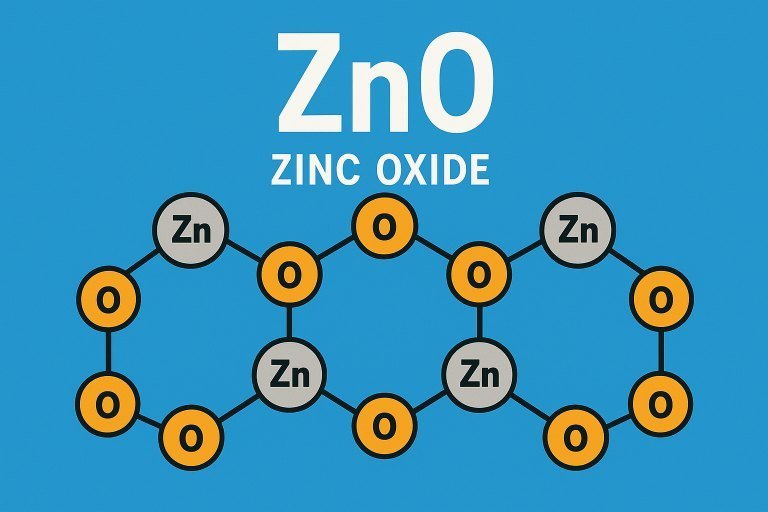
Zinc Oxide (ZnO) is an inorganic compound with the chemical formula ZnO, consisting of zinc and oxygen in a 1:1 ratio. It appears as a white powder or crystalline solid and is insoluble in water. ZnO exhibits a hexagonal wurtzite crystal structure under normal conditions, though it can also form a cubic zincblende structure under specific conditions. Its key physical and chemical properties make it suitable for a wide range of applications. Below are some critical parameters that define ZnO:
- Molecular Weight: 81.38 g/mol
- Melting Point: 1975°C (sublimes)
- Density: 5.606 g/cm³
- Band Gap: 3.37 eV (direct band gap semiconductor)
- Refractive Index: 2.0041 at 550 nm
- Solubility: Insoluble in water, soluble in acids and alkalis
ZnO is amphoteric in nature, meaning it can react with both acids and bases. It also possesses piezoelectric properties, which are crucial for applications in sensors and transducers. Additionally, its wide band gap and high exciton binding energy (60 meV) make it an excellent material for optoelectronic devices. ZnO is thermally stable and exhibits high resistance to harsh environmental conditions, further enhancing its industrial utility.
Synthesis Methods of Zinc Oxide
The production of ZnO can be achieved through various methods, each tailored to specific industrial needs based on purity, particle size, and morphology. The synthesis process significantly influences the properties of the final ZnO product. Here, we discuss the most commonly used synthesis techniques for ZnO production in detail.
Direct Process (American Process)
In the direct process, zinc ore or zinc metal is heated in the presence of air or oxygen at high temperatures (above 900°C). The zinc vaporizes and reacts with oxygen to form ZnO. This method is cost-effective and widely used for producing large quantities of ZnO for industrial applications. However, the resulting ZnO may contain impurities from the raw materials.
Indirect Process (French Process)
The indirect process involves the oxidation of high-purity zinc metal. Zinc is first melted and vaporized at around 1000°C, and the vapor is then oxidized in a controlled environment to form fine ZnO particles. This method produces ZnO with higher purity and smaller particle sizes, making it suitable for applications in cosmetics and pharmaceuticals.
Wet Chemical Methods
Wet chemical methods, such as precipitation and hydrothermal synthesis, are used to produce ZnO nanoparticles with controlled morphology. In precipitation, a zinc salt solution (e.g., zinc nitrate) is reacted with a base (e.g., sodium hydroxide) to form ZnO. Hydrothermal synthesis involves heating the reaction mixture under high pressure in an aqueous medium, allowing for the formation of nanostructured ZnO. These methods are preferred for producing ZnO for advanced applications like electronics and nanotechnology.
Other Techniques
Additional synthesis techniques include vapor deposition, sol-gel processes, and mechanochemical methods. These methods are often employed for specific research purposes or to achieve unique ZnO nanostructures, such as nanorods, nanowires, or thin films, which are critical for specialized applications in sensors and optoelectronics.
Applications of ZnO Across Industries
Zinc Oxide's unique combination of properties, including UV protection, antibacterial activity, and electrical conductivity, makes it a valuable material across multiple industries. Below, we explore the primary applications of ZnO, highlighting its technical significance and practical uses.
Cosmetics and Personal Care
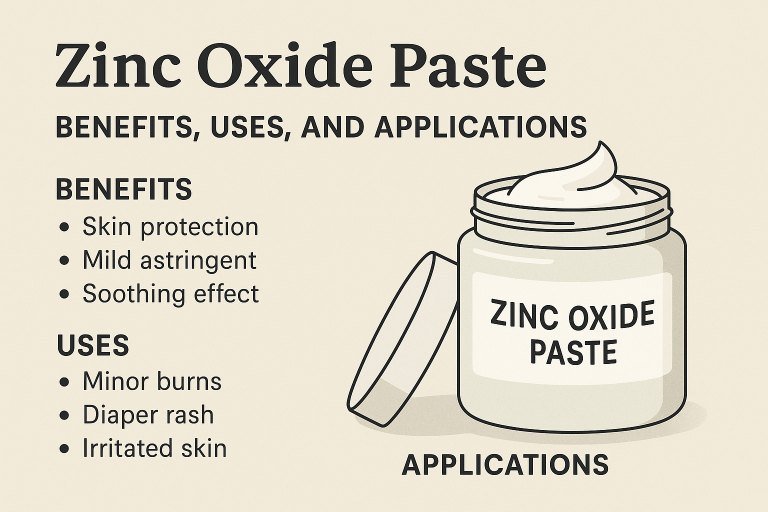
ZnO is widely used in the cosmetics industry, particularly in sunscreens, due to its ability to block both UVA and UVB rays. It acts as a physical barrier, reflecting and scattering UV radiation. Unlike chemical UV filters, ZnO is non-irritating and safe for sensitive skin. It is also used in skincare products for its soothing and anti-inflammatory properties, often found in creams for treating diaper rash and minor burns. ZnO's particle size in cosmetics typically ranges from 20 to 100 nm to ensure transparency on the skin.
Electronics and Optoelectronics
In the electronics industry, ZnO serves as a semiconductor material due to its wide band gap and high electron mobility. It is used in the production of light-emitting diodes (LEDs), laser diodes, and transparent conductive films. ZnO thin films are also employed in solar cells and touchscreens. Its piezoelectric properties make it suitable for use in sensors, actuators, and energy harvesting devices.
Healthcare and Biomedical Applications
ZnO exhibits antibacterial and antifungal properties, making it a valuable material in healthcare. It is incorporated into wound dressings, bandages, and medical coatings to prevent infections. ZnO nanoparticles are also being studied for drug delivery systems and bioimaging due to their biocompatibility and ability to target specific cells.
Industrial and Environmental Uses
In industrial applications, ZnO is used as a pigment in paints, coatings, and ceramics due to its brightness and resistance to discoloration. It is also a key component in rubber manufacturing, where it acts as a vulcanization activator. Environmentally, ZnO is used in photocatalytic applications for water purification, as it can degrade organic pollutants under UV light exposure.
Key Parameters of ZnO in Specific Applications
The effectiveness of ZnO in various applications often depends on specific parameters such as particle size, purity, and morphology. The table below summarizes these parameters for common uses of ZnO:
| Application | Particle Size | Purity Requirement | Morphology |
|---|---|---|---|
| Sunscreen | 20-100 nm | High (>99%) | Nanoparticles |
| Electronics | 10-500 nm | Very High (>99.9%) | Thin Films, Nanowires |
| Paints/Coatings | 200-1000 nm | Moderate (>98%) | Microparticles |
| Biomedical | 10-100 nm | High (>99%) | Nanoparticles |
Safety and Environmental Considerations of ZnO
While ZnO is generally considered safe for use in many applications, certain precautions must be taken, especially with ZnO nanoparticles. Inhalation of fine ZnO particles can cause respiratory irritation, and prolonged exposure may lead to a condition known as "metal fume fever." In environmental contexts, the release of ZnO nanoparticles into water bodies may pose risks to aquatic life, as they can exhibit toxicity at high concentrations. Proper handling, disposal, and regulatory compliance are essential to mitigate these risks. ZnO used in consumer products, such as sunscreens, must meet strict safety standards to ensure it is non-toxic and skin-safe.
Conclusion
Zinc Oxide (ZnO) is a multifaceted compound with a broad spectrum of applications, ranging from cosmetics to electronics and healthcare. Its unique physical and chemical properties, such as UV protection, semiconducting behavior, and antibacterial activity, make it indispensable in modern industries. By understanding the synthesis methods and tailoring ZnO's characteristics like particle size and morphology, industries can optimize its performance for specific uses. This comprehensive guide has provided a technical and systematic overview of ZnO, emphasizing its properties, production, and practical applications. As a material, ZnO continues to play a critical role in advancing technology and improving quality of life across various sectors.