3D printing, also known as additive manufacturing, constructs three-dimensional objects by depositing material layer by layer based on digital models. This technology has transformed industries by enabling rapid prototyping, customization, and complex geometries unachievable with traditional methods. This article provides a detailed, technical exploration of 3D printing processes, materials, applications, and key parameters, emphasizing its systematic implementation in professional settings.
Core 3D Printing Processes
3D printing encompasses various processes, each suited to specific applications and materials. The following sections detail the most widely used methods, their mechanisms, and technical specifications.
Fused Deposition Modeling (FDM)
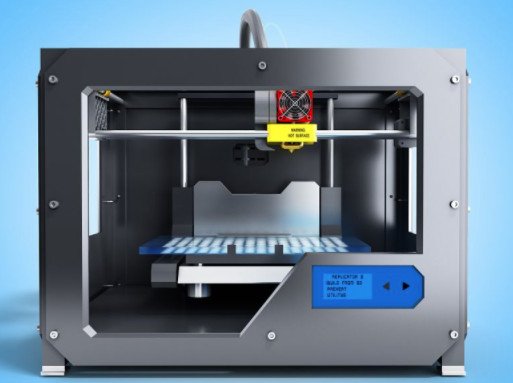
Fused Deposition Modeling (FDM) is the most accessible and widely used 3D printing process. It involves extruding a thermoplastic filament through a heated nozzle, which deposits material layer by layer to form the object. FDM is popular for its cost-effectiveness and versatility in prototyping and small-scale production.
- Mechanism: A filament, typically 1.75 mm or 2.85 mm in diameter, is fed into a heated extruder (200–250°C for PLA, 230–280°C for ABS). The nozzle moves along a predefined path to deposit material on a build platform.
- Layer Thickness: 0.1–0.4 mm, depending on nozzle size and desired resolution.
- Advantages: Low-cost materials, ease of use, and wide material compatibility.
- Applications: Prototyping, educational models, and functional parts like jigs and fixtures.
Stereolithography (SLA)
Stereolithography (SLA) uses a laser to cure liquid photopolymer resin into solid layers. It is renowned for its high precision and smooth surface finish, making it ideal for detailed prototypes and intricate designs.
- Mechanism: A UV laser (typically 405 nm wavelength) selectively cures resin in a vat, solidifying it layer by layer. The build platform lowers incrementally (0.025–0.1 mm per layer).
- Resolution: Up to 25 microns, enabling fine details.
- Advantages: High accuracy and excellent surface quality.
- Applications: Dental models, jewelry molds, and high-precision prototypes.
Selective Laser Sintering (SLS)
Selective Laser Sintering (SLS) employs a laser to fuse powdered materials, such as nylon or polyamide, into solid structures. It is valued for producing durable, functional parts without support structures.
- Mechanism: A high-power CO2 laser (10–100 W) fuses powder particles in a heated build chamber (near the material’s melting point, e.g., 170–190°C for nylon). Unfused powder supports the structure during printing.
- Layer Thickness: 0.08–0.15 mm.
- Advantages: No need for support structures, enabling complex geometries.
- Applications: Functional prototypes, end-use parts, and aerospace components.
Direct Metal Laser Sintering (DMLS)
Direct Metal Laser Sintering (DMLS) is an advanced process for metal 3D printing, using a laser to sinter metal powders into dense, functional parts. It is critical in industries requiring high-strength components.
- Mechanism: A fiber laser (200–400 W) fuses metal powders (e.g., titanium, stainless steel) in an inert gas environment (argon or nitrogen). Layer thickness ranges from 20–50 microns.
- Advantages: Produces near-full-density metal parts with mechanical properties comparable to traditional manufacturing.
- Applications: Aerospace, medical implants, and automotive components.
Materials in 3D Printing
The choice of material significantly impacts the performance and application of 3D-printed parts. Below is a comprehensive overview of common materials and their properties.
| Material | Process | Properties | Applications |
|---|---|---|---|
| Polylactic Acid (PLA) | FDM | Biodegradable, tensile strength: 50–70 MPa, printing temp: 190–220°C | Prototypes, educational models |
| Acrylonitrile Butadiene Styrene (ABS) | FDM | Durable, impact-resistant, printing temp: 230–250°C | Functional parts, automotive components |
| Photopolymer Resin | SLA | High resolution, tensile strength: 38–65 MPa, UV-curable | Dental models, jewelry |
| Nylon (PA12) | SLS | High strength, elongation at break: 20–30%, heat-resistant | Functional parts, aerospace |
| Titanium (Ti6Al4V) | DMLS | Tensile strength: 900–1200 MPa, biocompatible | Medical implants, aerospace components |
Applications of 3D Printing Technology
3D printing has diverse applications across industries, leveraging its ability to produce complex designs with minimal waste. Below are key sectors utilizing this technology.
Aerospace
Aerospace relies on 3D printing for lightweight, high-strength components. DMLS produces complex geometries like turbine blades with internal cooling channels, reducing weight by up to 30% compared to traditional methods. For example, GE Aviation uses DMLS to manufacture fuel nozzles, consolidating 20 parts into a single component.
Medical and Dental
In healthcare, 3D printing enables patient-specific solutions. SLA and DMLS create dental aligners, surgical guides, and biocompatible implants. Titanium implants, with porosity tailored to 60–80% for bone integration, demonstrate the technology’s precision.
Automotive
Automotive manufacturers use 3D printing for prototyping and producing lightweight parts. FDM and SLS produce jigs, fixtures, and end-use parts like air ducts, reducing production time by up to 60% compared to traditional tooling.
Consumer Products
3D printing facilitates customized consumer goods, such as eyewear and footwear. SLS and SLA allow for intricate designs and rapid iteration, enabling brands to offer bespoke products with lead times as short as 24 hours.
Technical Parameters and Considerations
Optimizing 3D printing requires precise control of parameters to ensure quality and efficiency. Below is a table summarizing key parameters for major processes.
| Process | Layer Thickness (mm) | Build Volume (mm) | Print Speed | Material Cost ($/kg) |
|---|---|---|---|---|
| FDM | 0.1–0.4 | 200 x 200 x 200 (typical) | 50–150 mm/s | 20–50 (PLA, ABS) |
| SLA | 0.025–0.1 | 145 x 145 x 175 (typical) | 10–20 mm/h | 100–200 (resin) |
| SLS | 0.08–0.15 | 300 x 300 x 300 (typical) | 20–40 mm/h | 50–100 (nylon) |
| DMLS | 0.02–0.05 | 250 x 250 x 325 (typical) | 5–20 cm³/h | 300–1000 (metals) |
FAQ
What is the difference between 3D printing and additive manufacturing?
3D printing and additive manufacturing are often used interchangeably. Both involve building objects layer by layer from digital models. Additive manufacturing is the broader industrial term, encompassing 3D printing and other layer-based fabrication methods.
Which 3D printing process is best for prototyping?
FDM is ideal for low-cost prototyping with functional materials, while SLA is preferred for high-precision prototypes requiring smooth surfaces and fine details.
What materials are compatible with metal 3D printing?
DMLS supports metals like titanium (Ti6Al4V), stainless steel, aluminum, and Inconel, offering high strength and biocompatibility for aerospace and medical applications.
How does layer thickness affect 3D printing quality?
Thinner layers (e.g., 0.025 mm in SLA) improve resolution and surface finish but increase print time. Thicker layers (e.g., 0.4 mm in FDM) reduce print time but may compromise detail.