Mercuric oxide, also known as mercury(II) oxide, is a chemical compound with the formula HgO. It is a significant substance in the field of chemistry due to its unique properties and historical importance. This compound appears as a red or yellow solid, depending on its preparation method and particle size, and has been utilized in various applications over the years. This article provides an in-depth look into the chemical and physical properties of mercuric oxide, its synthesis methods, industrial uses, and essential safety considerations for handling and storage. With a focus on technical accuracy and comprehensive coverage, this guide aims to serve as a valuable resource for professionals, researchers, and students in the chemical sciences.
Chemical and Physical Properties of Mercuric Oxide
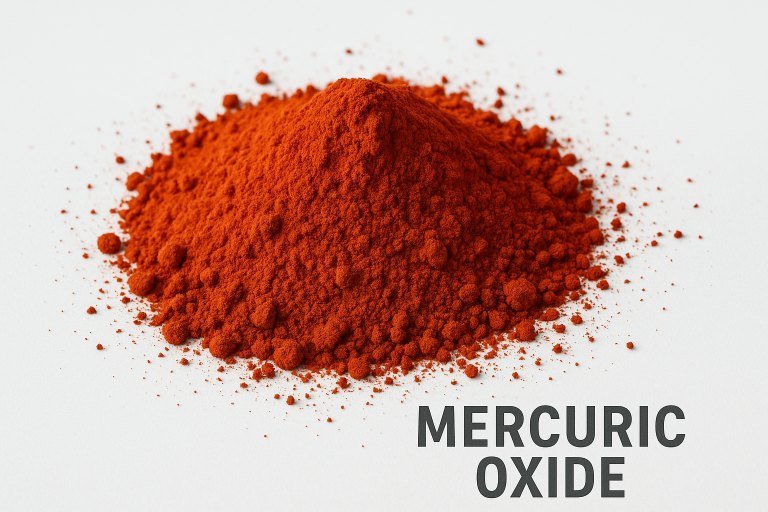
Mercuric oxide (HgO) is an inorganic compound composed of mercury and oxygen. Its chemical behavior and physical characteristics make it a compound of interest in both academic research and industrial applications. The compound exists in two primary forms: a red form, which is more common and produced by heating mercury in oxygen, and a yellow form, which results from precipitation methods. Below, the key properties of mercuric oxide are detailed for a better understanding of its nature.
At the molecular level, mercuric oxide has a molar mass of 216.59 g/mol. It is insoluble in water, with a solubility product that renders it effectively non-dissolving under standard conditions. Its density is approximately 11.14 g/cm³, reflecting the heavy nature of mercury as an element. The compound decomposes upon heating, typically above 500°C, releasing mercury vapor and oxygen gas—a reaction historically significant in the discovery of oxygen by Joseph Priestley in the 18th century. The decomposition reaction can be represented as:
2HgO (s) → 2Hg (l) + O₂ (g)
In terms of its crystal structure, mercuric oxide adopts an orthorhombic lattice in its red form, contributing to its stability under ambient conditions. The compound is also known for its oxidizing properties, which are leveraged in specific chemical reactions. Its reactivity with acids, bases, and other substances further defines its utility in laboratory settings, though it requires careful handling due to its toxic nature.
Synthesis and Preparation Methods
The production of mercuric oxide can be achieved through several methods, each yielding the compound with distinct characteristics. The most common synthesis routes include direct combination and precipitation techniques, both of which are detailed below to provide a clear understanding of how this compound is prepared on both laboratory and industrial scales.
The direct combination method involves heating elemental mercury in the presence of oxygen or air. At temperatures between 300°C and 350°C, mercury reacts with oxygen to form the red form of mercuric oxide. This method requires precise control of temperature to prevent decomposition of the product back into mercury and oxygen. The reaction is as follows:
2Hg (l) + O₂ (g) → 2HgO (s)
Alternatively, the yellow form of mercuric oxide is typically prepared through a precipitation method. This involves the reaction of a soluble mercury salt, such as mercury(II) nitrate, with a base like sodium hydroxide. The resulting precipitate is then filtered, washed, and dried to obtain the yellow mercuric oxide. The yellow form is less thermally stable than the red form but can be converted to the red form upon heating. Both methods require stringent safety protocols due to the toxicity of mercury and its compounds.
Industrial and Laboratory Applications
Mercuric oxide has found applications across various domains, particularly in industrial processes and laboratory experiments. While its use has declined in recent years due to environmental and health concerns related to mercury, it remains relevant in specific niche areas. This section explores the primary uses of mercuric oxide, highlighting its role in chemical synthesis and other technical fields.
One of the most well-known applications of mercuric oxide is in the production of mercury batteries, also known as button cells. These batteries utilize mercuric oxide as a cathode material due to its high energy density and stable voltage output. A typical mercury battery operates at a nominal voltage of 1.35 volts and has a capacity ranging from 100 to 500 mAh, depending on its size. Although the use of mercury batteries has been largely phased out in many countries due to environmental regulations, they are still used in specialized equipment where consistent voltage is critical.
In laboratory settings, mercuric oxide serves as a reagent in organic and inorganic synthesis. It acts as an oxidizing agent in reactions requiring the conversion of alcohols to carbonyl compounds or in the preparation of other mercury-containing compounds. Additionally, its historical role in the discovery of oxygen underscores its importance in the development of modern chemistry, even if its practical use in this context is now obsolete.
Safety Considerations and Handling Guidelines
Given the toxic nature of mercury and its compounds, handling mercuric oxide requires strict adherence to safety protocols to prevent exposure and environmental contamination. This section outlines the critical safety measures, storage requirements, and disposal methods to ensure safe interaction with this compound in both laboratory and industrial environments.
Mercuric oxide is classified as highly toxic and poses significant health risks if inhaled, ingested, or absorbed through the skin. Exposure to even small amounts can lead to mercury poisoning, which affects the nervous system, kidneys, and other vital organs. Therefore, personal protective equipment (PPE) such as gloves, goggles, and respiratory protection must be worn when working with this compound. Work should be conducted in a well-ventilated area or under a fume hood to minimize inhalation risks.
Storage of mercuric oxide must be in tightly sealed containers, away from heat sources and incompatible substances such as reducing agents. Containers should be clearly labeled with hazard warnings and stored in a secure, designated area to prevent accidental exposure. In case of a spill, specialized cleanup procedures must be followed, and the area should be evacuated until the spill is contained and neutralized using appropriate absorbents.
Disposal of mercuric oxide and mercury-containing waste must comply with local and international regulations. It should never be disposed of in regular trash or sewage systems due to the risk of environmental contamination. Instead, it must be handled as hazardous waste and processed through certified disposal facilities to ensure safe and responsible management.
Environmental Impact and Regulatory Framework
The use and disposal of mercuric oxide are subject to stringent regulations due to the environmental hazards posed by mercury. This section provides an overview of the environmental impact of mercuric oxide and the regulatory guidelines that govern its handling and use in various regions.
Mercury compounds, including mercuric oxide, are persistent environmental pollutants that can bioaccumulate in aquatic ecosystems, leading to severe ecological damage. Mercury released into the environment can transform into methylmercury, a highly toxic form that affects wildlife and human health through the food chain. As a result, many countries have implemented strict controls on the production, use, and disposal of mercury-containing substances under agreements like the Minamata Convention on Mercury.
In industrial settings, facilities using mercuric oxide must adhere to emission standards and waste management protocols to minimize environmental release. Regular monitoring and reporting are often required to ensure compliance with regulatory limits. For researchers and professionals, understanding these regulations is crucial to maintaining ethical and legal standards in their work with mercuric oxide.
Comparison of Red and Yellow Forms of Mercuric Oxide
As mentioned earlier, mercuric oxide exists in two distinct forms—red and yellow. These forms differ in their physical properties, preparation methods, and stability, which can influence their suitability for specific applications. The following table provides a detailed comparison of the two forms to aid in understanding their unique characteristics.
| Property | Red Mercuric Oxide | Yellow Mercuric Oxide |
|---|---|---|
| Preparation Method | Heating mercury in oxygen | Precipitation from mercury salts |
| Color | Red | Yellow |
| Thermal Stability | More stable | Less stable |
| Particle Size | Larger particles | Smaller particles |
| Crystal Structure | Orthorhombic | Orthorhombic (less defined) |
This comparison highlights the differences that may affect the choice of form for specific chemical processes or applications. While the red form is generally preferred for its stability, the yellow form may be used in reactions requiring finer particles or specific reactivity profiles.